Scholars
Megan Evans
University of New South Wales, Canberra, Australia
Based in
Australia
Australia
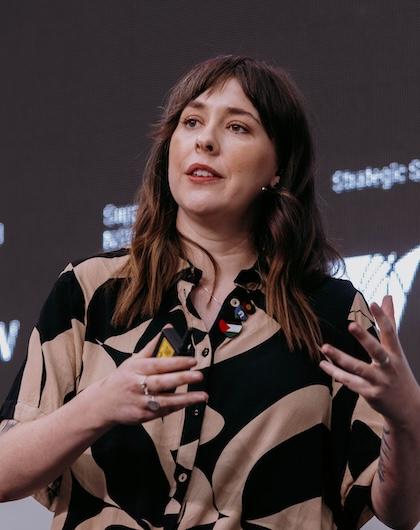
Dr Megan Evans is a Senior Lecturer in Public Sector Management within the School of Business, UNSW Canberra, and Chief Investigator with the UNSW Institute for Climate Risk & Response. She is an interdisciplinary social scientist whose work aims to inform the design, implementation and evaluation of environmental laws, policies and tools. Her current research focuses on misinformation and climate obstruction via carbon markets, and improving the disclosure of the use of carbon credits within corporate financial reports.
Megan’s research has contributed significantly to environmental policy in Australia and internationally: key examples include her work on forest regeneration carbon offset integrity that triggered the Independent Review of Australian Carbon Credit Units (Chubb review), the development of the Australian government’s biodiversity offset policy under federal environmental laws, and work on the economics of land-based carbon offsets that informed the establishment of the $500 million Land Restoration Fund in Queensland.
She is a frequent commentator in the media and sits on the editorial board of the journal Conservation Letters.
Country(ies) of Specialty
AustraliaFocus areas of expertise
Greenwashing Climate policy and politics Net ZeroHow to Connect
Publications
Articles
Anantharajah, Kirsty, and Megan Evans. “Biodiversity Finance as a Technology of Power: Discourses of Innovation and Regulation in an Australian Case Study.” SocArXiv, OSF, 3 Dec. 2024. osf.io, https://doi.org/doi.org/10.31235/osf.io/ep8zr.
Bell-James, Justine, et al. “Not All Conservation ‘Policy’ Is Created Equally: When Does a Policy Give Rise to Legally Binding Obligations?” Conservation Letters, vol. 17, no. 6, 2024, p. e13054. Wiley Online Library, https://doi.org/10.1111/conl.13054.
Evans, Megan, et al. “Extinctions: Conserve Not Collate.” Nature, vol. 474, no. 7351, 2011, pp. 284–284.
Evans, Megan C. “Backloading to Extinction: Coping with Values Conflict in the Administration of Australia’s Federal Biodiversity Offset Policy.” Australian Journal of Public Administration, vol. 82, no. 2, 2023, pp. 228–47. Wiley Online Library, https://doi.org/10.1111/1467-8500.12581.
Evans, Megan C., Ayesha I. T. Tulloch, Elizabeth A. Law, et al. “Better Planning Outcomes Requires Clear Consideration of Costs, Condition and Conservation Benefits, and Access to the Best Available Data: Reply to Gosper et al., 2016.” Biological Conservation, vol. 200, Aug. 2016, pp. 242–43. ScienceDirect, https://doi.org/10.1016/j.biocon.2016.06.009.
Evans, Megan C., Josie Carwardine, Rod J. Fensham, et al. “Carbon Farming via Assisted Natural Regeneration as a Cost-Effective Mechanism for Restoring Biodiversity in Agricultural Landscapes.” Environmental Science & Policy, vol. 50, Jun. 2015, pp. 114–29. ScienceDirect, https://doi.org/10.1016/j.envsci.2015.02.003.
Evans, Megan C., Ayesha I. T. Tulloch, Elizabeth A. Law, et al. “Clear Consideration of Costs, Condition and Conservation Benefits Yields Better Planning Outcomes.” Biological Conservation, vol. 191, Nov. 2015, pp. 716–27. ScienceDirect, https://doi.org/10.1016/j.biocon.2015.08.023.
Evans, Megan C. “Deforestation in Australia: Drivers, Trends and Policy Responses.” Pacific Conservation Biology, vol. 22, no. 2, 2016, pp. 130–50.
Evans, Megan C. “Effective Incentives for Reforestation: Lessons from Australia’s Carbon Farming Policies.” Current Opinion in Environmental Sustainability, vol. 32, no. April, 2018, pp. 38–45, https://doi.org/10.1016/j.cosust.2018.04.002.
Evans, Megan C., Federico Davila, Anne Toomey, et al. “Embrace Complexity to Improve Conservation Decision Making.” Nature Ecology & Evolution, Oct. 2017, p. 1. www.nature.com, https://doi.org/10.1038/s41559-017-0345-x.
Evans, Megan C. “Re-Conceptualizing the Role(s) of Science in Biodiversity Conservation.” Environmental Conservation, vol. 48, no. 3, 2021, pp. 151–60. Cambridge University Press, https://doi.org/10.1017/S0376892921000114.
Evans, Megan C, James E. M. Watson, et al. “The Spatial Distribution of Threats to Species in Australia.” BioScience, vol. 61, no. 4, 2011, pp. 281–89, https://doi.org/10.1525/bio.2011.61.4.8.
Evans, Megan C., Susan Barnes, Hang Thanh Bui, et al. “Trends in Biodiversity Finance Terminology, Actors and Networks over Two Decades.” OSF, 12 Feb. 2025. OSF Preprints, https://doi.org/10.31235/osf.io/awqzp_v1.
Evans, Megan C, Hugh P. Possingham, et al. “What to Do in the Face of Multiple Threats? Incorporating Dependencies within a Return on Investment Framework for Conservation.” Diversity and Distributions, vol. 17, no. 3, 2011, pp. 437–50, https://doi.org/10.1111/j.1472-4642.2011.00747.x.
Evans, Megan C., and Christopher Cvitanovic. “An Introduction to Achieving Policy Impact for Early Career Researchers.” Palgrave Communications, vol. 4, no. 1, Jul. 2018, p. 88. www.nature.com, https://doi.org/10.1057/s41599-018-0144-2.
Gibbons, Philip, et al. “A Loss-Gain Calculator for Biodiversity Offsets and the Circumstances in Which No Net Loss Is Feasible.” Conservation Letters, vol. 9, no. 4, 2016, pp. 252–59. Wiley Online Library, https://doi.org/10.1111/conl.12206.
Jassim, Danya, et al. “Community Perceptions of Carbon Farming: A Case Study of the Semi-Arid Mulga Lands in Queensland, Australia.” Journal of Rural Studies, vol. 96, Dec. 2022, pp. 78–88. ScienceDirect, https://doi.org/10.1016/j.jrurstud.2022.10.010.
Kujala, Heini, et al. “Credible Biodiversity Offsetting Needs Public National Registers to Confirm No Net Loss.” One Earth, vol. 5, no. 6, Jun. 2022, pp. 650–62. ScienceDirect, https://doi.org/10.1016/j.oneear.2022.05.011.
Leseberg, Nicholas P., et al. “Establishing Effective Conservation Management Strategies for a Poorly Known Endangered Species: A Case Study Using Australia’s Night Parrot (Pezoporus Occidentalis).” Biodiversity and Conservation, vol. 32, no. 8, Jul. 2023, pp. 2869–91. Springer Link, https://doi.org/10.1007/s10531-023-02633-8.
Lindenmayer, David B., et al. “The Anatomy of a Failed Offset.” Biological Conservation, vols. 210, Part A, Jun. 2017, pp. 286–92. ScienceDirect, https://doi.org/10.1016/j.biocon.2017.04.022.
Lucas, Patrick, et al. “Environmental ‘Nonuse Rights’ Warrant Caution.” Science, vol. 374, no. 6569, Nov. 2021, pp. 832–832. science.org (Atypon), https://doi.org/10.1126/science.abm4324.
Macintosh, Andrew, Don Butler, Pablo Larraondo, Megan C. Evans, et al. “Australian Human-Induced Native Forest Regeneration Carbon Offset Projects Have Limited Impact on Changes in Woody Vegetation Cover and Carbon Removals.” Communications Earth & Environment, vol. 5, no. 1, Mar. 2024, pp. 1–11. www.nature.com, https://doi.org/10.1038/s43247-024-01313-x.
Macintosh, Andrew, Don Butler, Marie Waschka, Dean Ansell, et al. “Independent Review of Australian Carbon Credit Units: What It Did and Didn’t Do.” Australian Environment Review, vol. 37, no. 7, 2023, pp. 130–35.
Macintosh, Andrew, Megan C. Evans, Donald Butler, et al. “Non-Compliance and under-Performance in Australian Human-Induced Regeneration Projects.” The Rangeland Journal, vol. 46, 2024, p. RJ24024. www.publish.csiro.au, https://doi.org/10.1071/RJ24024.
Macintosh, Andrew, Megan C. Evans, Don Butler, et al. “Reply to: National-Scale Datasets Underestimate Vegetation Recovery in Australian Human-Induced Native Forest Regeneration Carbon Sequestration Projects.” Communications Earth & Environment, vol. 6, no. 1, Oct. 2025, p. 803, https://doi.org/10.1038/s43247-025-02726-y.
Maron, Martine, Joseph W. Bull, et al. “Locking in Loss: Baselines of Decline in Australian Biodiversity Offset Policies.” Biological Conservation, vol. 192, 2015, pp. 504–12. ScienceDirect, https://doi.org/10.1016/j.biocon.2015.05.017.
Maron, Martine, Fabien Quétier, et al. “‘Nature Positive’ Must Incorporate, Not Undermine, the Mitigation Hierarchy.” Nature Ecology & Evolution, Sep. 2023, pp. 1–4. www.nature.com, https://doi.org/10.1038/s41559-023-02199-2.
Maron, Martine, Christopher D. Ives, et al. “Taming a Wicked Problem: Resolving Controversies in Biodiversity Offsetting.” BioScience, vol. 66, no. 6, Jun. 2016, pp. 489–98. bioscience.oxfordjournals.org, https://doi.org/10.1093/biosci/biw038.
Maron, Martine, Susie Brownlie, et al. “The Many Meanings of No Net Loss in Environmental Policy.” Nature Sustainability, vol. 1, no. 1, 2018, pp. 19–27, https://doi.org/10.1038/s41893-017-0007-7.
Martin, Nigel, et al. “Using Offsets to Mitigate Environmental Impacts of Major Projects: A Stakeholder Analysis.” Journal of Environmental Management, vol. 179, Sep. 2016, pp. 58–65. CrossRef, https://doi.org/10.1016/j.jenvman.2016.04.054.
Maseyk, Fleur, et al. “Improving Averted Loss Estimates for Better Biodiversity Outcomes from Offset Exchanges.” Oryx, 2019.Maseyk, Fleur J. F., et al. “Improving Averted Loss Estimates for Better Biodiversity Outcomes from Offset Exchanges.” Oryx, vol. 55, no. 3, May 2021, pp. 393–403. Cambridge University Press, https://doi.org/10.1017/S0030605319000528.
Mayfield, Helen J., et al. “Estimating Species Response to Management Using an Integrated Process: A Case Study from New South Wales, Australia.” Conservation Science and Practice, vol. 2, no. 11, 2020. Wiley Online Library, https://doi.org/10.1111/csp2.269.
McDonald, Matt, et al. “Ecological Crises and Ecopolitics Research in Australia.” Australian Journal of Politics & History, vol. 71, no. 1, 2025, pp. 147–65. Wiley Online Library, https://doi.org/10.1111/ajph.13016.
Miller, Katherine L., et al. “The Development of the Australian Environmental Offsets Policy: From Theory to Practice.” Environmental Conservation, vol. 42, no. 4, Jan. 2015, pp. 306–14. Cambridge Journals Online, https://doi.org/10.1017/S037689291400040X.
Moon, Katie, et al. “Expanding the Role of Social Science in Conservation through an Engagement with Philosophy, Methodology, and Methods.” Methods in Ecology and Evolution, vol. 10, no. 3, 2019, pp. 294–302. Wiley Online Library, https://doi.org/10.1111/2041-210X.13126.
Narain, Divya, et al. “A Step Change Needed to Secure a Nature-Positive Future—Is It in Reach?” One Earth, vol. 5, no. 6, Jun. 2022, pp. 589–92. ScienceDirect, https://doi.org/10.1016/j.oneear.2022.05.016.
Reed, S. E., et al. “Roles for Scientific Societies to Engage with Conservation Policy.” Conservation Biology, vol. 32, no. 3, 2018, pp. 513–15, https://doi.org/10.1111/cobi.13092.
Reside, April E., et al. “Ecological Consequences of Land Clearing and Policy Reform in Queensland.” Pacific Conservation Biology, vol. 23, no. 3, 2017, pp. 219–30, https://doi.org/10.1071/PC17001.
Taher, Toiaba B., et al. “Impacts of Shrimp Aquaculture on the Local Communities and Conservation of the World’s Largest Protected Mangrove Forest.” Environmental Science & Policy, vol. 147, Sep. 2023, pp. 351–60. ScienceDirect, https://doi.org/10.1016/j.envsci.2023.07.002.
Taylor, Martin F. J., et al. “What Works for Threatened Species Recovery? An Empirical Evaluation for Australia.” Biodiversity and Conservation, vol. 20, no. 4, Jan. 2011, pp. 767–77, https://doi.org/10.1007/s10531-010-9977-8.
Tulloch, Ayesha I. T., et al. “The Value of Using Feasibility Models in Systematic Conservation Planning to Predict Landholder Management Uptake.” Conservation Biology, vol. 28, no. 6, Dec. 2014, pp. 1462–73. Wiley Online Library, https://doi.org/10.1111/cobi.12403.
Tulloch, Vivitskaia JD, et al. “Why Do We Map Threats? Linking Threat Mapping with Actions to Make Better Conservation Decisions.” Frontiers in Ecology and the Environment, vol. 13, no. 2, 2015, pp. 91–99. esajournals.org.virtual.anu.edu.au (Atypon), https://doi.org/10.1890/140022.
Watson, James E. M., et al. “The Capacity of Australia’s Protected-Area System to Represent Threatened Species.” Conservation Biology, vol. 25, no. 2, 2011, pp. 324–32, https://doi.org/10.1111/j.1523-1739.2010.01587.x.
Wilson, Kerrie a, et al. “Prioritizing Conservation Investments for Mammal Species Globally.” Philosophical Transactions of the Royal Society of London. Series B, Biological Sciences, vol. 366, no. 1578, Sep. 2011, pp. 2670–80, https://doi.org/10.1098/rstb.2011.0108.
Wunder, Sven, et al. “Biodiversity Credits: An Overview of the Current State, Future Opportunities, and Potential Pitfalls.” Business Strategy and the Environment, vol. 34, no. 7, 2025, pp. 8470–99. Wiley Online Library, https://doi.org/10.1002/bse.70018.
Wyborn, Carina, and Megan C. Evans. “Conservation Needs to Break Free from Global Priority Mapping.” Nature Ecology & Evolution, Aug. 2021, pp. 1–3. www.nature.com, https://doi.org/10.1038/s41559-021-01540-x.zu
Ermgassen, Sophus O. S. E., et al. “Five Rules for Scientifically Credible Nature Markets.” Nature Ecology & Evolution, vol. 10, no. 2, Feb. 2026, pp. 181–92. www.nature.com, https://doi.org/10.1038/s41559-025-02932-z.