

CSSN scholar Belén Fernández Milmanda explores the congressional obstruction efforts by agribusiness, and the effects on environmental reforms on Brazil and Chile. See the full article below!
Abstract
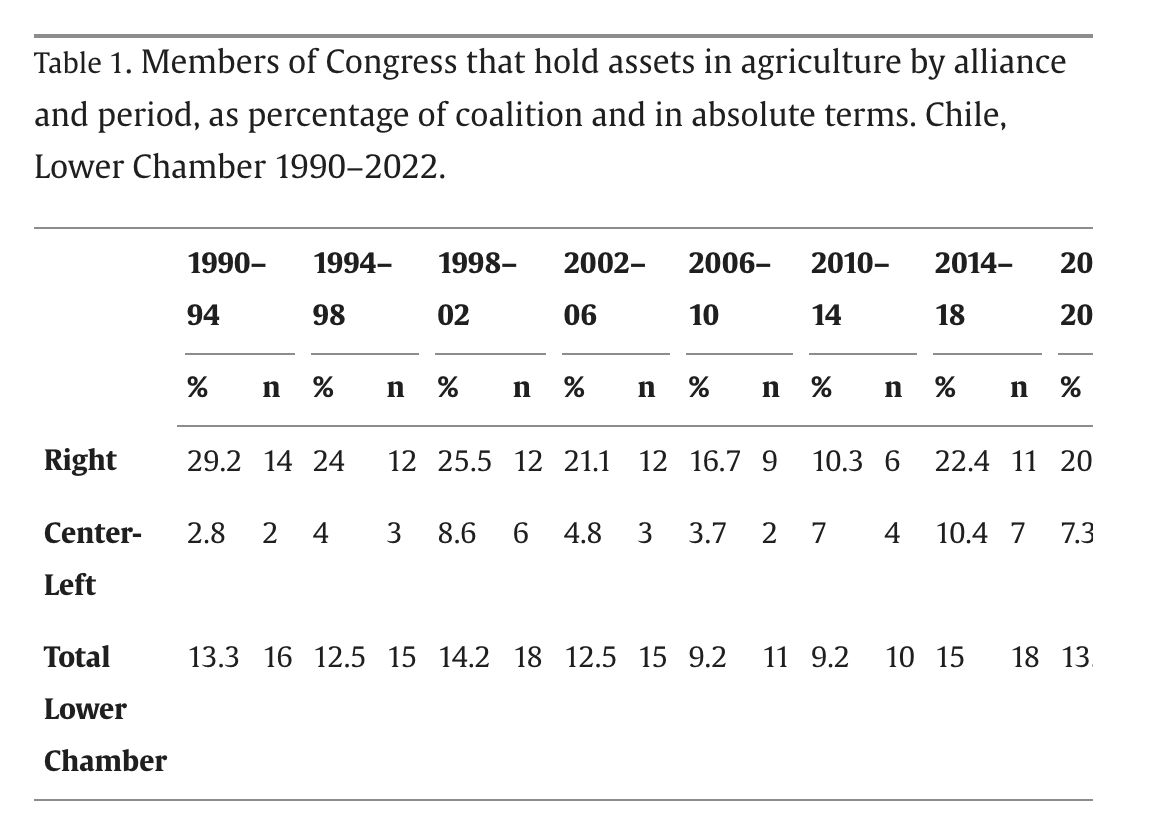
Scholars have emphasized the prevalence of weak institutions as an explanation for disappointing developmental outcomes in Latin America, focusing on low enforcement as a key cause of institutional weakness. This paper shows, by contrast, how institutional weakness can result from design features that make regulations, even those that are fully enforced, ineffective. I analyze the design and passage of two heavily contested environmental reforms, the Brazilian New Forest Code enacted in 2012 and the Chilean Water Code reform passed in 2022, documenting how, in the two countries, economic actors bearing the costs of environmental reforms organized in the legislative arena to influence the design of regulations in a way that mitigated their compliance costs. I process-trace each bill’s formulation, debate and passage to show how agribusiness embedded in the letter of the law design features that severely limited the capacity of these new regulations to accomplish their statutory goal of protecting natural resources. Evidence for my process tracing comes from the archival analysis of multiple sources—legislative debates, roll call data, producers’ associations’ publications, and newspaper articles—and elite interviews. By analyzing a country with ideologically cohesive legislative coalitions (Chile) and another with extreme party system fragmentation and programmatically loose parties (Brazil), I contribute to the business politics literature showing how economic elites can organize successfully in the legislative arena to block or dilute institutional reforms that threaten their interests under different institutional contexts. My empirical findings contribute to developmental and environmental studies and can inform policymakers by showing how environmental degradation may result not from lack of regulation or enforcement but from the intentional design of weak institutions.