Scholars
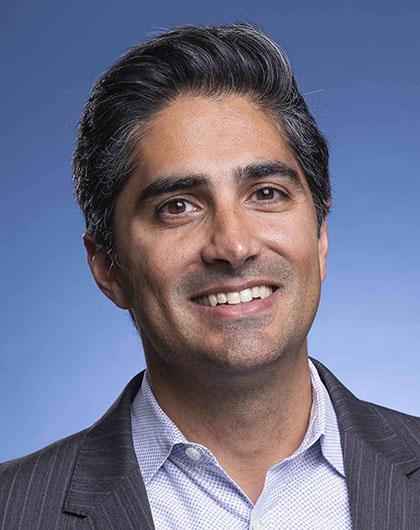
Paasha Mahdavi
University of California, Santa Barbara
Based in
United States
North America
Paasha Mahdavi is Associate Professor of Political Science, Affiliated Professor of Environmental Science & Management, Director of the Energy Governance and Political Economy Lab, and Co-Founder of The 2035 Initiative at UC Santa Barbara. His research focuses on the impact of oil and gas on governance and environmental politics. Mahdavi holds non-resident fellowships at Johns Hopkins and the Colorado School of Mines and was a former fellow at the World Economic Forum and Council on Foreign Relations. Mahdavi serves as a consultant for environmental NGOs, consulting expert in climate litigation, and advisor for oil policy in the U.S. and internationally.
Country(ies) of Specialty
Iran VanuatuFocus areas of expertise
How to Connect
Publications
Articles
Mahdavi, Paasha, Michael L. Ross, and Evelyn Simoni. “Fossil fuel subsidy reforms have become more fragile.” Nature Climate Change (2025): 1-6. https://www.nature.com/articles/s41558-025-02283-4
Mahdavi, Paasha. Collaborative levers for methane abatement in national oil companies. Environmental Defense Fund, Policy Report (2024). https://business.edf.org/insights/collaborative-levers-for-methane-abatement-in-national-oil-companies/
Bergquist, Parrish, and Paasha Mahdavi. “Examining the effect of cost information and framing on support for methane regulations in Europe.” Environmental Research Letters 18.9 (2023): 094046. https://iopscience.iop.org/article/10.1088/1748-9326/acf32c/meta
Mahdavi, Paasha, Jessica Green, Jennifer Hadden, and Thomas Hale. “Using earnings calls to understand the political behavior of major polluters.” Global Environmental Politics 22.1 (2022): 159-174. https://direct.mit.edu/glep/article-abstract/22/1/159/108210
Green, Jessica, Jennifer Hadden, Thomas Hale, and Paasha Mahdavi. “Transition, hedge, or resist? Understanding political and economic behavior toward decarbonization in the oil and gas industry.” Review of international political economy 29.6 (2022): 2036-2063. https://doi.org/10.1080/09692290.2021.1946708
Martinez-Alvarez, Cesar B., Chad Hazlett, Paasha Mahdavi, and Michael L. Ross. “Political leadership has limited impact on fossil fuel taxes and subsidies.” Proceedings of the National Academy of Sciences 119.47 (2022): e2208024119. https://www.pnas.org/doi/abs/10.1073/pnas.2208024119
Mahdavi, Paasha, Cesar B. Martinez-Alvarez, and Michael L. Ross. “Why do governments tax or subsidize fossil fuels?.” The Journal of Politics 84.4 (2022): 2123-2139. https://doi.org/10.1086/719272
Mahdavi, Paasha. Power grab: Political survival through extractive resource nationalization. Cambridge University Press (2020). https://doi.org/10.1017/9781108781350
Calel, Raphael, and Paasha Mahdavi. “The unintended consequences of antiflaring policies—and measures for mitigation.” Proceedings of the National Academy of Sciences 117.23 (2020): 12503-12507. https://www.pnas.org/doi/abs/10.1073/pnas.2006774117
Ross, Michael L., Chad Hazlett, and Paasha Mahdavi. “Global progress and backsliding on gasoline taxes and subsidies.” Nature Energy 2.1 (2017): 1-6. https://doi.org/10.1038/nenergy.2016.201