

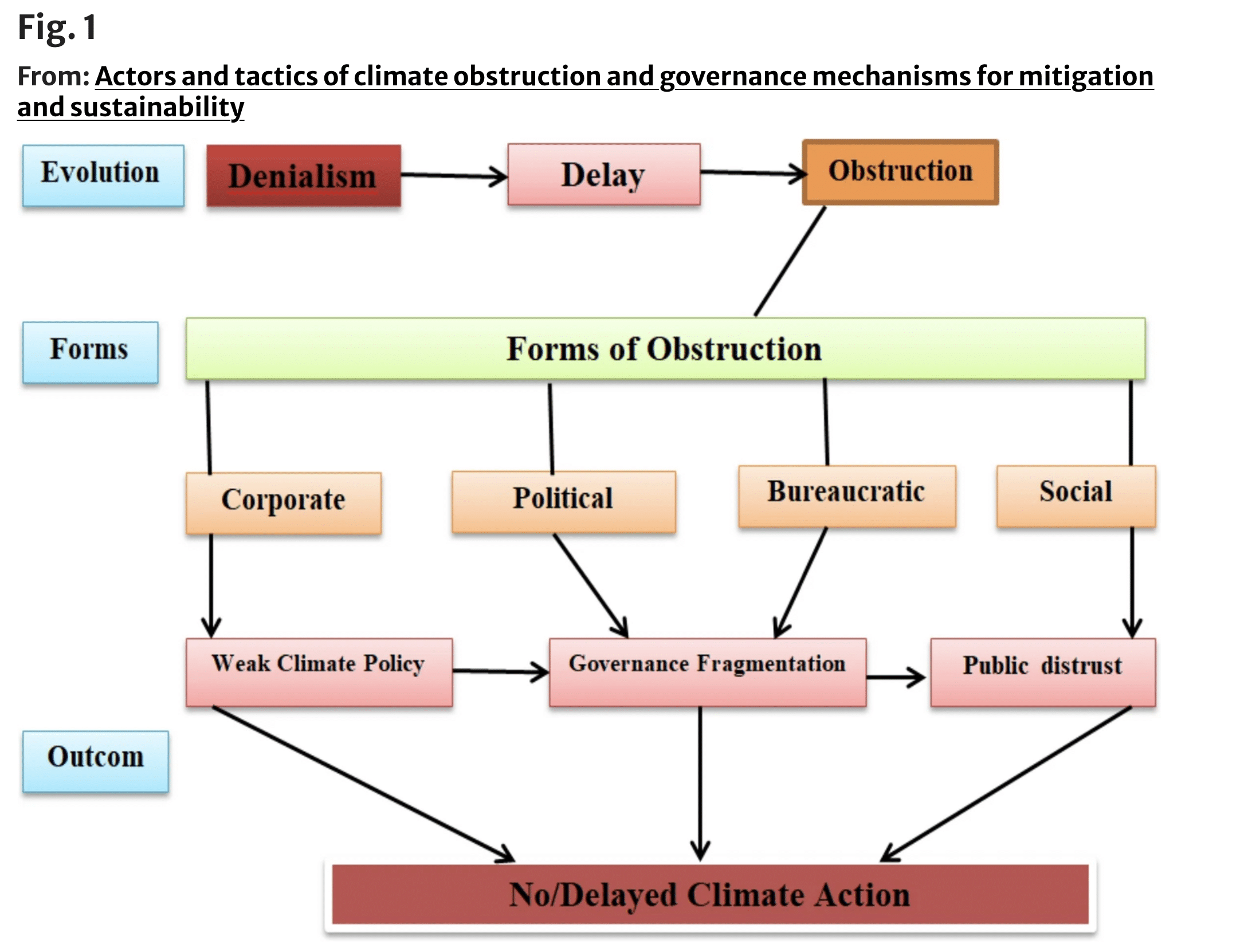
Climate obstruction in East African countries can look different than that observed in the global North. These varying pressure points are explored in the new article, “Actors and tactics of climate obstruction and governance mechanisms for mitigation and sustainability,” from a CSSN grant project, “Climate Obstructionism in East African Countries: Stakeholder Resistance Towards Electric Vehicles.”
Researchers Yitayal Addis Alemayehu, Gebrie Tsegaye Mersha & Adnan Sirage Ali, state in the piece: “Climate obstruction in East Africa cannot necessarily be understood through actor-centered or single-mechanism explanations alone. Climate-policy implementation in the region occurs within complex political-economic and institutional environments characterized by competing development priorities, resource constraints, dependence on external finance and technology, institutional capacity challenges, and diverse social and ideological perspectives. Under such conditions, obstruction may emerge not only through direct opposition to climate policies but also through interactions among economic interests, political decision-making, bureaucratic practices, and social or ideological narratives.”